Colour-Line generates power and recovers heat for powder coating

Customers of aluminium component supplier Alu-Line in Bad Saulgau wanted assemblies delivered with the surface finish already applied. Alu-Line used to coordinate orders with as many as seven contract coaters. Its subsidiary Colour-Line brought powder coating in-house with a MEEH JUMBO-COAT system that entered service in March 2020.

From the wash booth to the curing oven

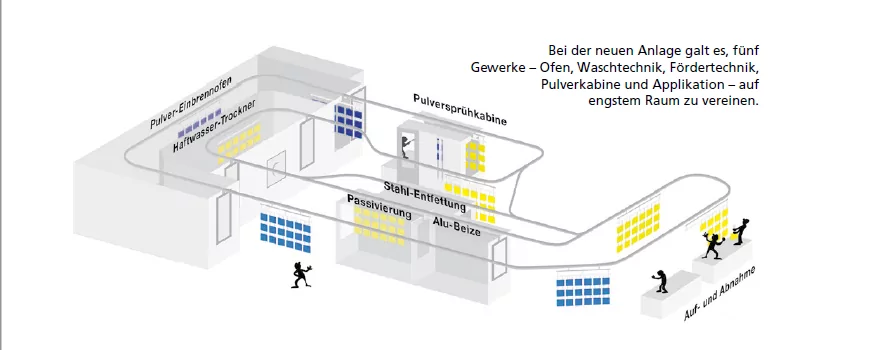
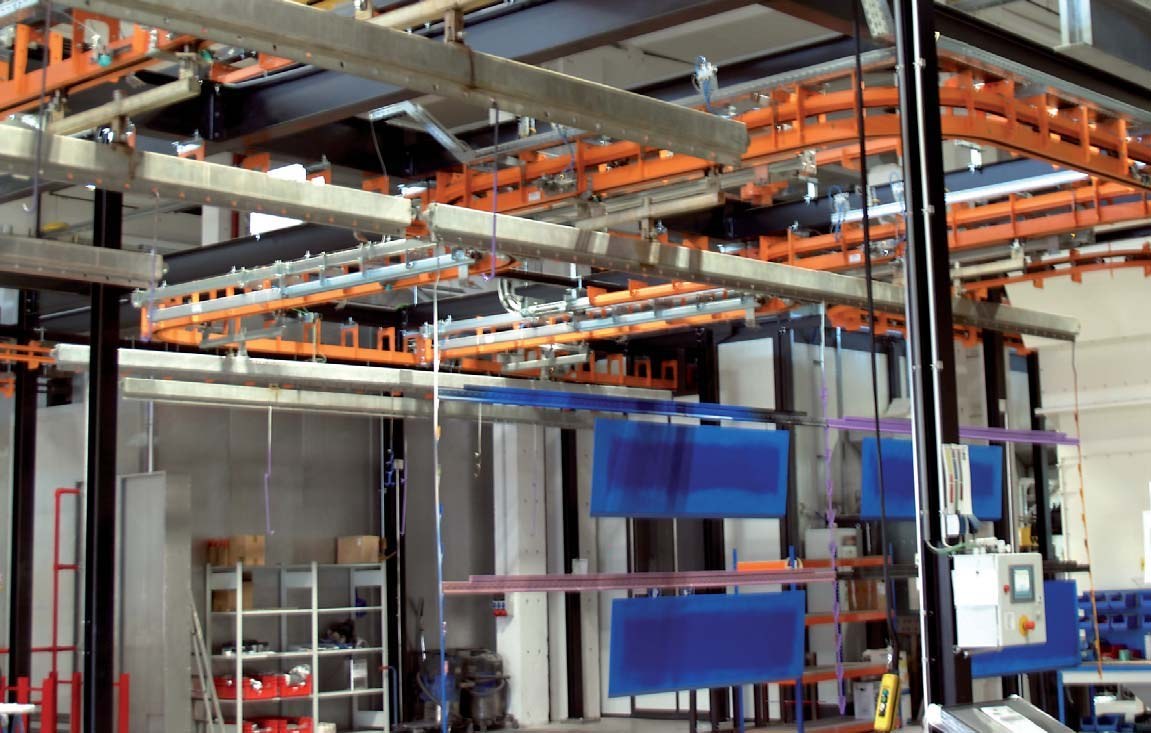
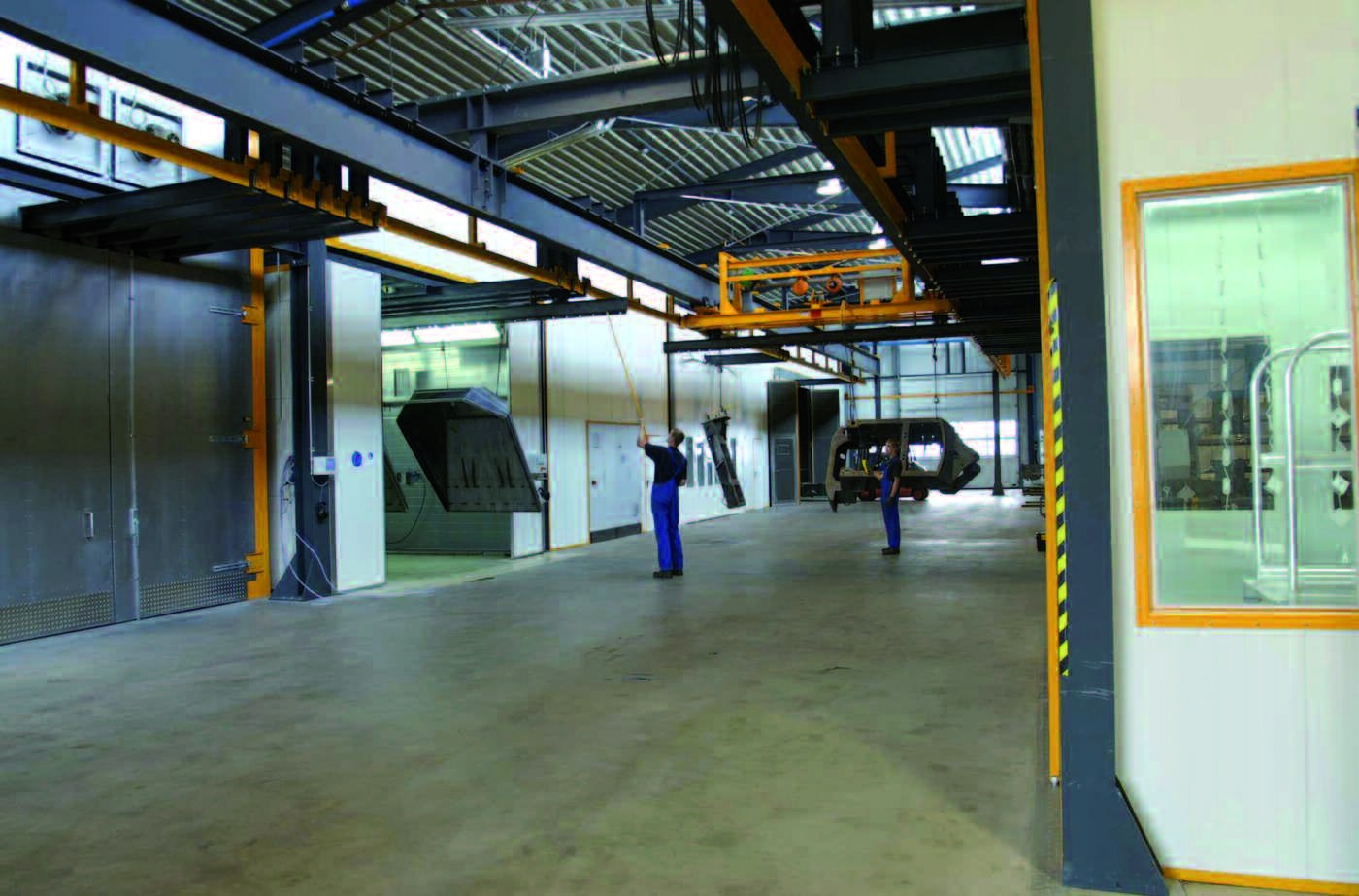
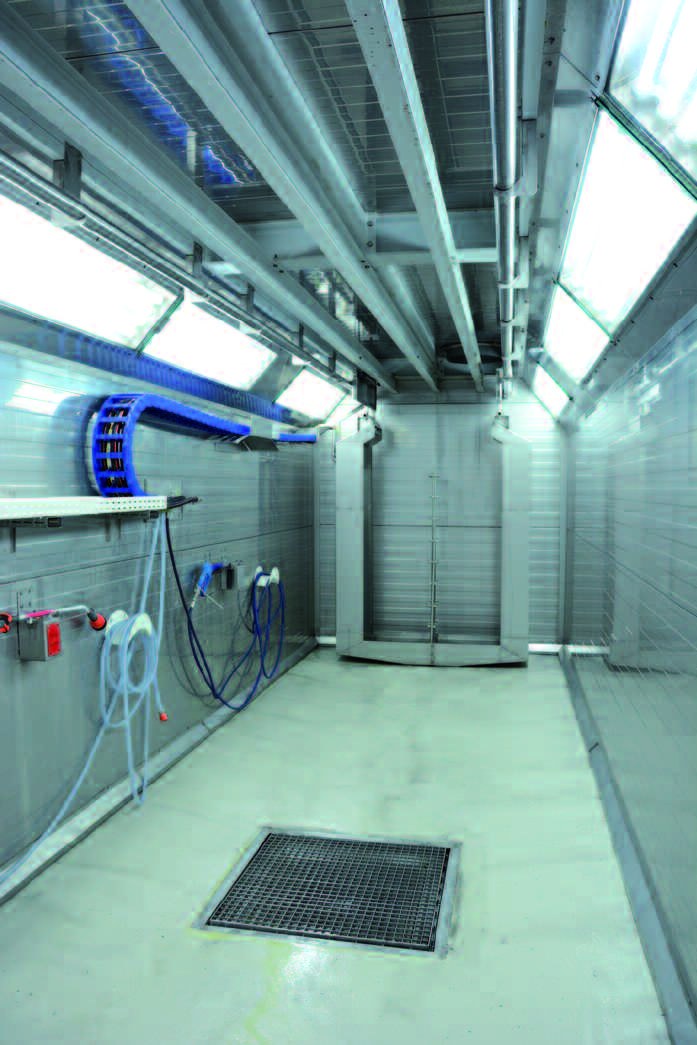
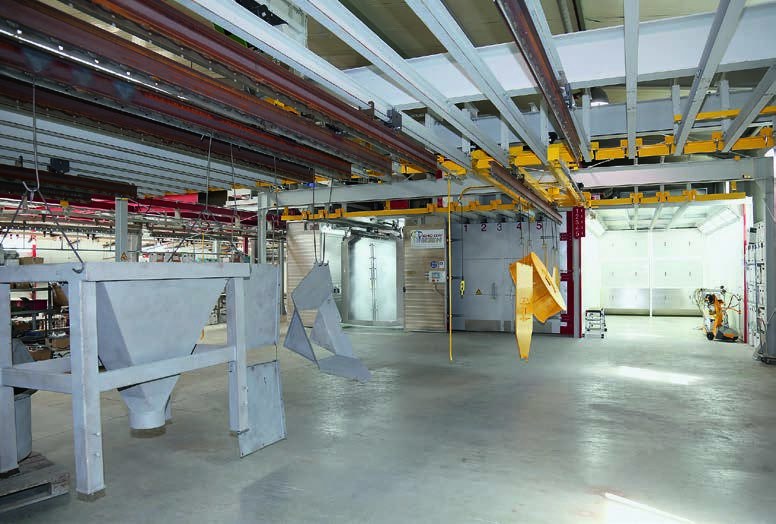
An electric transfer bridge connects the stations on a manually operated overhead conveyor. Two lifting and lowering stations assist with loading and unloading. Operators can use either the automatic washer or a hand lance in the stainless steel wash booth. Pretreatment depends on the substrate and includes phosphating for steel and pickling for aluminium. An evaporator treats process wastewater so that the distillate can be reused in the final rinse.

After drying, parts cool on buffer tracks. They are then coated in a powder booth with longitudinal extraction and moved to the oven for curing. The project report gives a workpiece envelope of up to 6,000 × 2,000 × 2,600 mm and a maximum carrier load of 1,000 kg per trolley.

How turbine exhaust heats successive process stages

Colour-Line selected a micro gas turbine rated at 50 kW electrical and 110 kW thermal output. Its exhaust, initially at about 280 °C, supplies heat to the powder curing oven. Surplus hot air then heats the dry-off oven. An air-to-water heat exchanger draws energy from the dryer exhaust into a thermal storage tank. The tank supplies heat to the pickling and degreasing baths and to the underfloor heating in the assembly hall.

At the time of the report, the operator quoted an order lead time of three to five days. Colour-Line handled outside orders as well as parts from Alu-Line. These figures describe the operating conditions documented in the original report.

Source · Original JOT article on Colour-Line’s powder coating system (PDF, German)
Dresel automates powder coating for steel, aluminium and galvanised parts

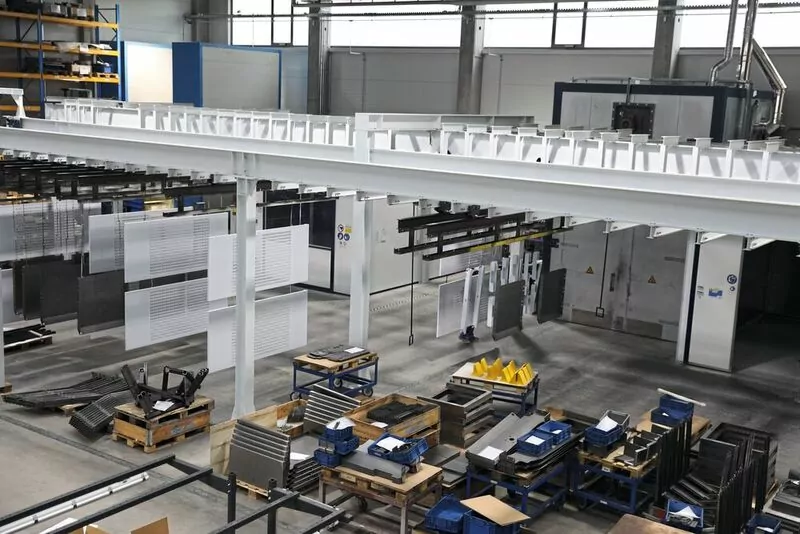
Beschichtungszentrum Dresel in Rheinfelden already used a JUMBO-COAT line for large and heavy work. Growing demand called for a second system for series orders. An adjoining former warehouse and beverage hall was available. MEEH had to coordinate pretreatment, ovens, conveyor, booth and application equipment in limited space. After comparing concepts, Dresel chose modular FLEX-i-COAT, installed in 2019.

FLEX-i-COAT installation at Dresel
Project photograph from the original case study.

How the system works

A lifting station loads the power-and-free conveyor. Aluminium follows a dedicated degreasing, pickling and passivation route. A separate line degreases and iron-phosphates steel and galvanised work. After drying, an automatic booth applies powder with recovery, and parts pass into the curing oven. Station cycles were matched to process times.

An evaporator treats water to support the zero-effluent operation described in the report. Chemicals are dosed automatically, and the in-house laboratory regularly checked process values. The dry-off oven is integrated into the oven arrangement. In winter, heat from the cooling zone can heat a neighbouring warehouse. The report does not quantify an energy saving.

Project specifications

Operator Beschichtungszentrum Dresel, Rheinfelden
System MEEH FLEX-i-COAT
Conveyor Power-and-free with lifting station
Workpiece weight on new line Up to 300 kg
Carrier length 3 m
System dimensions 23 × 18.8 × 5.2 m plus 18 m for workpiece transfer
Pretreatment Separate lines for aluminium and for steel and galvanised parts
Tracking Carrier QR codes and recorded process parameters

Traceability and results

QR codes on the carriers identify the order and settings for colour, film thickness, rinsing, passivation, curing time and temperature. The display shows carrier positions. Recorded target and actual values make individual orders traceable.

The 2020 accounts describe five employees processing about 60 carriers per shift, with numerous colour changes. Orders typically took two to three days and sometimes less. Series work on the new line freed the existing JUMBO-COAT system for large parts and urgent orders. These are historical operator figures for that part mix.

Project source

BESSER LACKIEREN, 5 June 2020, p. 3, JOT 7–8/2020 and the MEEH project reprint. The figures describe the installation and operating conditions documented in the report.

Planning a coating system

Automatic powder coating systems · Coating system modules and buying guide · Discuss your project with MEEH

Keller Blechtechnik powder coats a varied mix of sheet metal assemblies

In Endingen near Freiburg, Keller Blechtechnik chose a turnkey JUMBO-COAT line for its new factory. Founded in 1901 as a farrier, locksmith and agricultural equipment workshop, the fourth-generation family business opened the new plant in summer 2022. Its 80 employees used CNC and laser equipment to cut, bend, punch, weld and assemble sheet metal. Harald Keller described how combining those processes with in-house development allowed customers to buy everything from design to a finished assembly. Customers included the vehicle, machinery, agricultural, medical, solar and sensor industries.

Powder coating installation at Keller Blechtechnik
Project photograph from the original case study.

How the system works

Finishing is the last step before assembly and dispatch. Commercial vehicle brackets, sensor covers, electronic enclosures and hydraulic tank components are examples of the parts that need mechanical and corrosion protection. Electrostatic powder coating serves steel, galvanised steel and aluminium. The 36 × 18 m layout places the wash and rinse booth, combined oven and powder booth along a wall. Space between the oven and booth allows a further dryer or curing oven to be added. Buffer tracks face the booths towards the centre of the building.

Project specifications

Layout 36 × 18 m
Transfer bridges Two, each rated at up to 2,000 kg
Wash programme 20 minutes
Typical cure 20–30 minutes at 200 °C

Coating and curing

Two electric transfer bridges, each rated at up to 2,000 kg, work with manually moved overhead carriers. Operators can exchange loads at a booth while other carriers wait in the buffer. Ulrich Meeh, who managed the project and advised Keller on finishing, identified the range of weights, shapes and dimensions as a main design requirement.

Loading parts with wire hooks takes between ten minutes and two hours depending on the job. The carrier waits in a buffer until the washer is free. The operator exchanges it for a washed load and starts a 20-minute degreasing, phosphating and rinsing programme. Washed parts go into the combined dryer. After drying, they cool on a buffer track for about 15 to 30 minutes depending on material thickness.

In the powder booth the operator exchanges carriers in the same way. Manual Gema equipment handles a wide range of RAL colours, including small batches and complex shapes. Coating a carrier can take up to 25 minutes. Easy-to-clean components shorten colour changes. Powder typically cures for 20 to 30 minutes at 200 °C.

After cooling, operators remove masking and thread protectors and unload the work for assembly or dispatch. After nearly a year of operation, Keller reported consistent quality on demanding sheet metal work, small batches and larger series.

Project source

blechnet. The figures describe the installation and operating conditions documented in the report.

Planning a coating system

Modular coating systems · Coating system modules and buying guide · Discuss your project with MEEH

Otto Lehmann recovers heat on its powder coating line for solar roof brackets

Bavarian building products manufacturer Otto Lehmann GmbH makes roof brackets for photovoltaic and solar modules. As demand for solar installations grew, the existing coating capacity could no longer keep up. The company invested in an energy-efficient MEEH powder coating line.

Powder coating installation at Otto Lehmann
Project photograph from the original case study.

How the system works

The project required two new buildings. Construction started in April 2023. Once the floor could take installation traffic in October, MEEH began assembly. The first coated roof brackets came off the line in February 2024.

Project specifications

Construction began April 2023
Assembly began October 2023
First coated brackets February 2024
Oven fuels Gas or oil

Energy management

Parts pass through compact pretreatment and into a dry-off oven heated by exhaust air from the curing oven, which can run on gas or oil. Hot coated parts then pass through a heat recovery zone. Energy recovered there is returned to the curing oven.

The controls detect empty conveyors. When no more parts are approaching, they stop the automatic booth fans and reduce other loads. As soon as parts are loaded again, the controls wake the line in time for their arrival.

Project source

BESSER LACKIEREN, 26 May 2024, issue 9/2024. The figures describe the installation and operating conditions documented in the report.

Planning a coating system

Automatic powder coating systems · Coating system modules and buying guide · Discuss your project with MEEH

Huppertz combines manual and automatic powder coating for large steelwork

After years of operating its first line, steel and equipment manufacturer Huppertz in Sankt Vith needed more capacity and larger finishing spaces. In-house fabrications and contract coating orders included both large individual parts and repeat production.

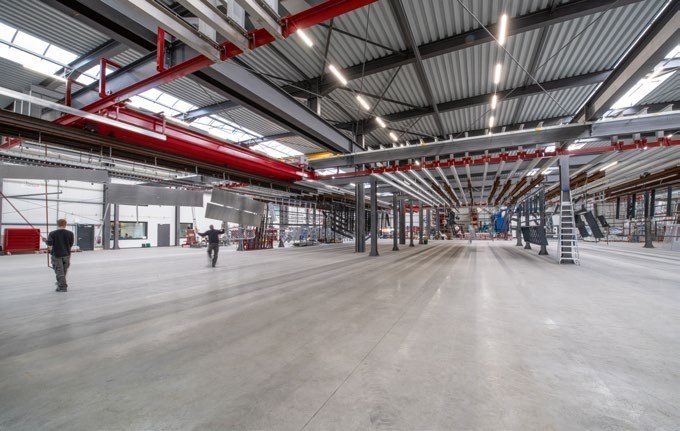
Red overhead conveyor and coating stations at Huppertz
Project photograph from the original case study.

How the system works

MEEH designed a second JUMBO-COAT system with seven modules and separate pretreatment options for steel and aluminium. Five electric transfer bridges link the stations to loading. Two include lifting and lowering stations. A manual powder booth has working platforms for large parts. The automatic booth recovers powder. The dryer uses waste heat from the curing oven, where multiple carrier positions allow dwell times to suit the material.

Project specifications

Workpiece envelope Up to 14 × 2.5 × 3.1 m
System JUMBO-COAT
Modules Seven
Handling Five electric transfer bridges
Application Manual and automatic

Project results

The installation increased the range of large parts Huppertz could handle while retaining automated application for repeat jobs. The report describes this as an investment in additional capacity and long-term development, without assigning a general throughput or savings percentage.

Project source

JOT 2/2021 — “Beschichtungsanlage, die Zweite”. The figures describe the installation and operating conditions documented in the report.

Planning a coating system

Modular coating systems · Coating system modules and buying guide · Discuss your project with MEEH

Plastcoat integrates FLEX-i-COAT into an existing factory

Dresden contract coater Plastcoat needed automated processing alongside manual finishing for larger work. Numerous columns restricted the layout, while different metals, long profiles and special parts placed different demands on the conveyor, pretreatment, oven and booths.

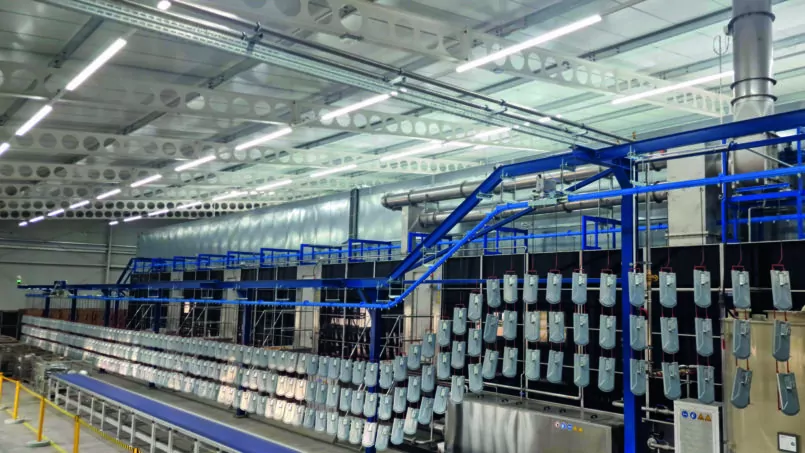
Orange conveyor and suspended components at Plastcoat
Project photograph from the original case study.

How the system works

MEEH lowered the pretreatment station and placed other equipment on an additional level. Seven-metre carriers move parts through the plant. A separate manual booth serves larger parts. Pretreatment sequences depend on the substrate, an evaporator treats water, and key process parameters are recorded. QR-based information and process visualisation help assign the correct operations.

Project specifications

Carrier length 7 m
Carrier load Up to 1,000 kg
Manual processing Up to 7,000 × 1,200 × 2,100 mm
System FLEX-i-COAT
Materials Steel, aluminium and galvanised parts

Project results

The project shows how a bespoke layout can extend the part range in an existing building. GSB certification was planned at the time of reporting. For a comparable project, a hall plan showing columns and access points helps define transfer interfaces, routes and cycle times before comparing offers.

Project source

MO — “Das Pulver immer neu erfinden”. The figures describe the installation and operating conditions documented in the report.

Planning a coating system

Automatic powder coating systems · Coating system modules and buying guide · Discuss your project with MEEH

Pöttinger switches to powder-on-powder coating for containers

At Bánovce in Slovakia, rising demand made wet painting and its long drying times a bottleneck for Pöttinger Entsorgungstechnik. The company had actual containers trial-coated before investing so it could assess the process and finish on the product itself.

Coated containers on the Pöttinger conveyor
Project photograph from the original case study.

How the system works

The JUMBO-COAT line handles pretreatment, powder application and curing. Two carriers can be combined for heavy containers. In the powder-on-powder process, primer and topcoat are applied before a single cure. The oven accounts for container geometry and the heat required to bring the work to temperature. The changeover included operator training and coordination with the coating supplier.

Project specifications

Workpiece envelope Up to 8 × 3 × 3 m
Maximum weight 4 t
System JUMBO-COAT
Process Powder-on-powder
Full operation From 2016

Project results

The report describes an increase from around 500 containers per year on three shifts to around 1,500 on two shifts. Coating a container took two to three hours compared with about eight previously. These figures relate to the documented project.

Project source

JOT — “Premium-Container in Pulver”. The figures describe the installation and operating conditions documented in the report.

Planning a coating system

Modular coating systems · Coating system modules and buying guide · Discuss your project with MEEH

Bergmann powder coats heavy vehicle components in-house

Bergmann Maschinenbau previously sent parts out for powder coating. At Plant II the aim was better material flow, quality control and responsiveness for heavy components, small batches and changing colours.

Yellow conveyor in front of process booths at Bergmann
Project photograph from the original case study.

How the system works

An electric transfer bridge links booths and buffers in an H-shaped layout. A lifting station assists with heavy work. A combined wet painting booth serves special parts. Operators wash large parts with a high-pressure lance, while an automatic spray frame handles smaller components. The manual powder booth is designed for frequent colour changes. Heat recovered from compressed-air generation warms the process water.

Project specifications

Workpiece envelope Up to 6 × 3 × 3 m
Maximum weight 4,000 kg
System JUMBO-COAT
Application Manual
Additional equipment Combined wet painting booth

Project results

The report describes shorter lead times, greater flexibility and improved material flow at Plant II, which opened in 2012. In the multi-colour operation described, changeovers took no more than five minutes.

Project source

BESSER LACKIEREN, 2012 — “Bis zu 6 m lange Werkstücke flexibel mit Pulver beschichten”. The figures describe the installation and operating conditions documented in the report.

Planning a coating system

Modular coating systems · Coating system modules and buying guide · Discuss your project with MEEH

Reflexa powder coats sun shading products with rapid colour changes

Reflexa needed profiles, covers and brackets in customer-specified colours at short notice in Rettenbach. Standard colours continued to be outsourced. For special colours the new line had to keep changeovers and lead times short.

Interior of a process booth with overhead conveyor at Reflexa
Project photograph from the original case study.

How the system works

The T-shaped layout occupies approximately 650 m². Carriers and a transfer bridge connect pretreatment, the dry-off oven, curing oven and powder booth. Chemical and exhaust equipment sit on an upper level. Frequent colour changes favour manual application without powder recovery. A vacuum evaporator treats wastewater, and hot exhaust from the curing oven heats the dryer.

Project specifications

Workpiece design Up to 6 m long and 1.5 m high
Footprint Approximately 650 m²
Application Manual, without powder recovery
Production start Early 2015
Focus Special colours for sun shading products

Project results

The 2015 report records 30 to 35 colour changes a day, taking less than one minute each. The operator reported around three to four hours for a full run with the part mix described.

Project source

JOT 8/2015 — “Sonnenschutzhersteller Reflexa nimmt Pulveranlage für Sonderfarben in Betrieb”. The figures describe the installation and operating conditions documented in the report.

Planning a coating system

If your orders require frequent colour changes, use the buyer’s checklist to specify batch sizes, changeover frequency and throughput before requesting quotations.

Modular coating systems · Coating system modules · Discuss your project with MEEH

Schachtel fits large-part powder coating into a confined space

At Schachtel Oberflächentechnik in Allstedt, the automatic line handled small series parts. Large work relied on a manual spray stand and external pretreatment, creating a bottleneck. Only 25 × 12 m was available beside the existing conveyor.

Metal components suspended on the Schachtel coating line
Project photograph from the original case study.

How the system works

MEEH fitted pretreatment, a combined drying and curing oven, a manual powder booth, a transfer bridge and buffers into that space. Process chemicals occupy an upper level. The wash booth turns through 45 degrees at the rear to keep an existing emergency exit accessible. Pretreatment accommodates steel, aluminium and galvanised parts.

An evaporator treats wastewater, while a loading area and lifting station connect handling with processing.

Project specifications

Workpiece envelope Up to 7,400 × 2,500 × 2,500 mm
Maximum weight 2 t
Available space 25 × 12 m
System JUMBO-COAT
Commissioned 30 June 2019

Project results

The line entered service on 30 June 2019. According to the report, Schachtel maintained throughput while reducing operation from three shifts to one and a half. This figure describes the production conditions at that site.

Project source

JOT 12/2019 — “Anlagenkonstruktion als Millimeterarbeit”. The figures describe the installation and operating conditions documented in the report.

Planning a coating system

When floor space is limited, use the layout and infrastructure checklist to record columns, access routes and buffer space before comparing system layouts.

Modular coating systems · Coating system modules · Discuss your project with MEEH